
Why invest in Oman property?
Oman offers something increasingly rare: a property market connected to long-term national development, a distinctive quality of life and defined ownership routes for international buyers. This guide explains the opportunity – and the questions a careful investor should ask before committing.
Updated 19 July 2026 | Approximately 12 minutes to read
A market to understand, not simply chase.
The strongest reason to consider Oman is not a single headline number. It is the way several fundamentals meet: a strategic location, a national programme of economic diversification, purposeful urban and tourism development, established routes for non-Omani property ownership, and a lifestyle that many owners genuinely want to use. None of these removes investment risk. Together, however, they create a market worth serious, property-specific research.
Oman is especially relevant to buyers who value a measured time horizon. The market should not be approached as a promise of instant appreciation or guaranteed rent. A better case begins with the quality of the underlying asset, its legal ownership structure, the strength of its location, realistic demand and the investor’s own purpose. That purpose may be income, capital preservation, future relocation, part-time use, family planning or a combination of these.
Long-view fundamentals
Assess Oman through infrastructure, diversification, urban development and the staying power of individual locations.
Ownership with lifestyle value
A home can produce personal utility as well as financial value – but only when the location fits how you plan to live or let.
A diligence-led decision
Ownership eligibility, title, developer delivery, service charges, tax and exit conditions must be checked for each property.
Muscat Bay
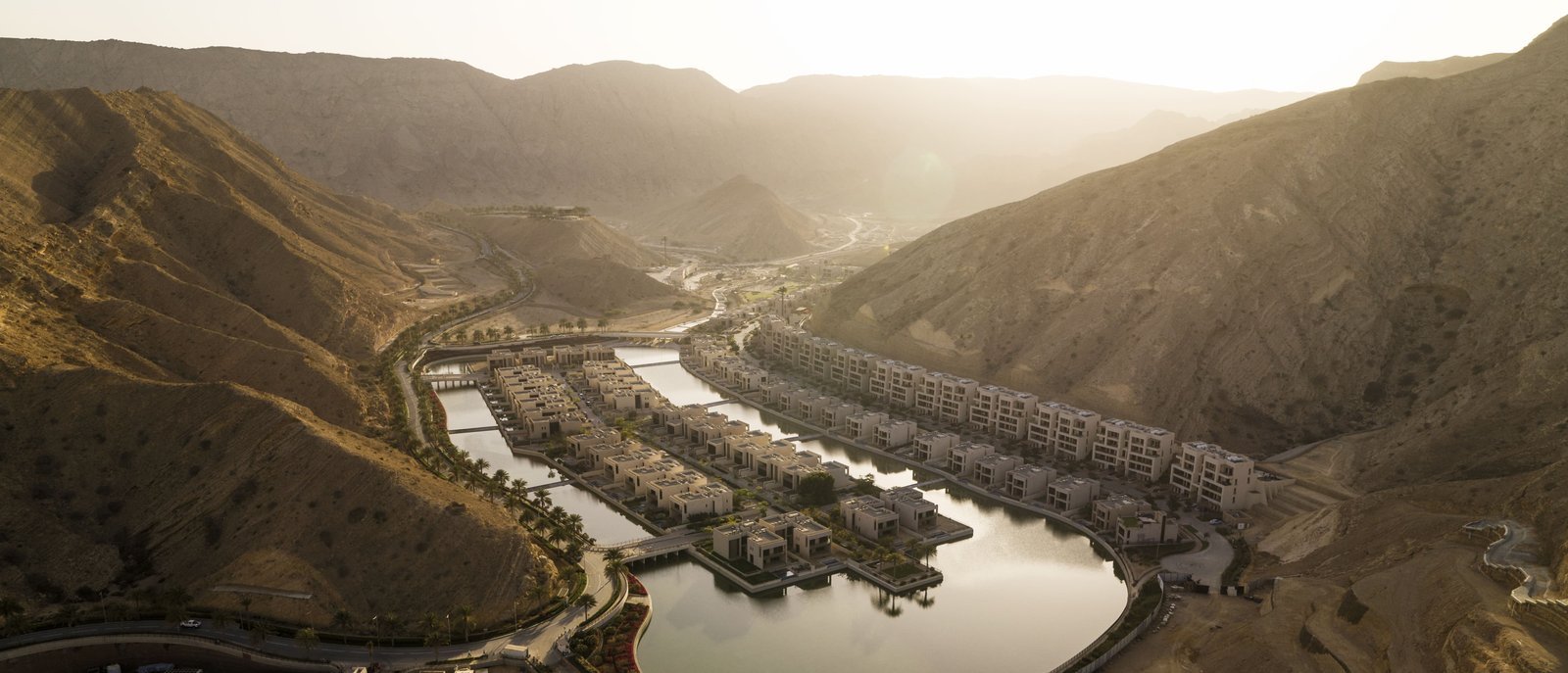
A coastal setting where landscape, hospitality and residential life meet.
The investment case, clearly structured.
A long-term economic story under Vision 2040.
Property markets do not exist in isolation. They are shaped by employment, infrastructure, business activity, tourism, population patterns and confidence in the places being built. Oman’s national direction therefore matters to a real-estate investor. Oman Vision 2040 provides the broad framework for economic diversification, private-sector growth, sustainable development and stronger cities. The practical investment question is how that direction reaches a specific location and asset.
The country is developing beyond its historic reliance on hydrocarbons. Logistics, tourism, manufacturing, fisheries, mining, technology, renewable energy and other sectors form part of a wider diversification effort. For property investors, the relevance is indirect but important: successful diversification can broaden the sources of housing demand, support new commercial centres, encourage visitor spending and justify infrastructure around emerging communities.
A national strategy is not itself a return forecast. Investors should trace the story down from policy to place. Which roads, public spaces, schools, hospitality assets, workplaces or transport links are complete? Which are funded and under construction? Which remain conceptual? A disciplined buyer gives more weight to what exists and what is contractually committed than to a distant masterplan image.
Official information is available through the Oman Vision 2040 programme and the Ministry of Commerce, Industry and Investment Promotion. Use those sources to understand national priorities, then test every property against local evidence.
A strategic address between regions.
Oman sits on the south-eastern edge of the Arabian Peninsula, facing the Arabian Sea and the Gulf of Oman. Its coastline and ports connect it naturally with the Gulf, South Asia and East Africa. For companies, that geography can support logistics, trade and tourism. For property owners, connectivity influences who may want to live, work, visit or maintain a second home in the country.
Muscat International Airport supports the capital’s role as the primary business and residential centre. Salalah has a different demand profile, strengthened by its seasonal khareef climate, tourism appeal and regional connections. Duqm is shaped more heavily by industrial, port and special-economic-zone development. These are not interchangeable property markets. Each has different tenants, seasonality, price points, infrastructure and exit conditions.
Within a city, micro-location matters even more. Driving time to employment areas, schools, healthcare, retail, beaches and the airport affects daily value. So do road access, walkability, community management, construction around the property and the amount of competing supply. A sea view may command attention, but an investor must also assess whether it is protected, whether access is convenient and whether the surrounding district will remain coherent as it develops.
Oman’s location is therefore a reason to investigate, not a reason to buy blindly. Translate the national map into the habits of the likely resident or guest. Ask where they work, why they choose the area, how long they stay and what would make them renew a lease or return for another season.
Jebel Sifah
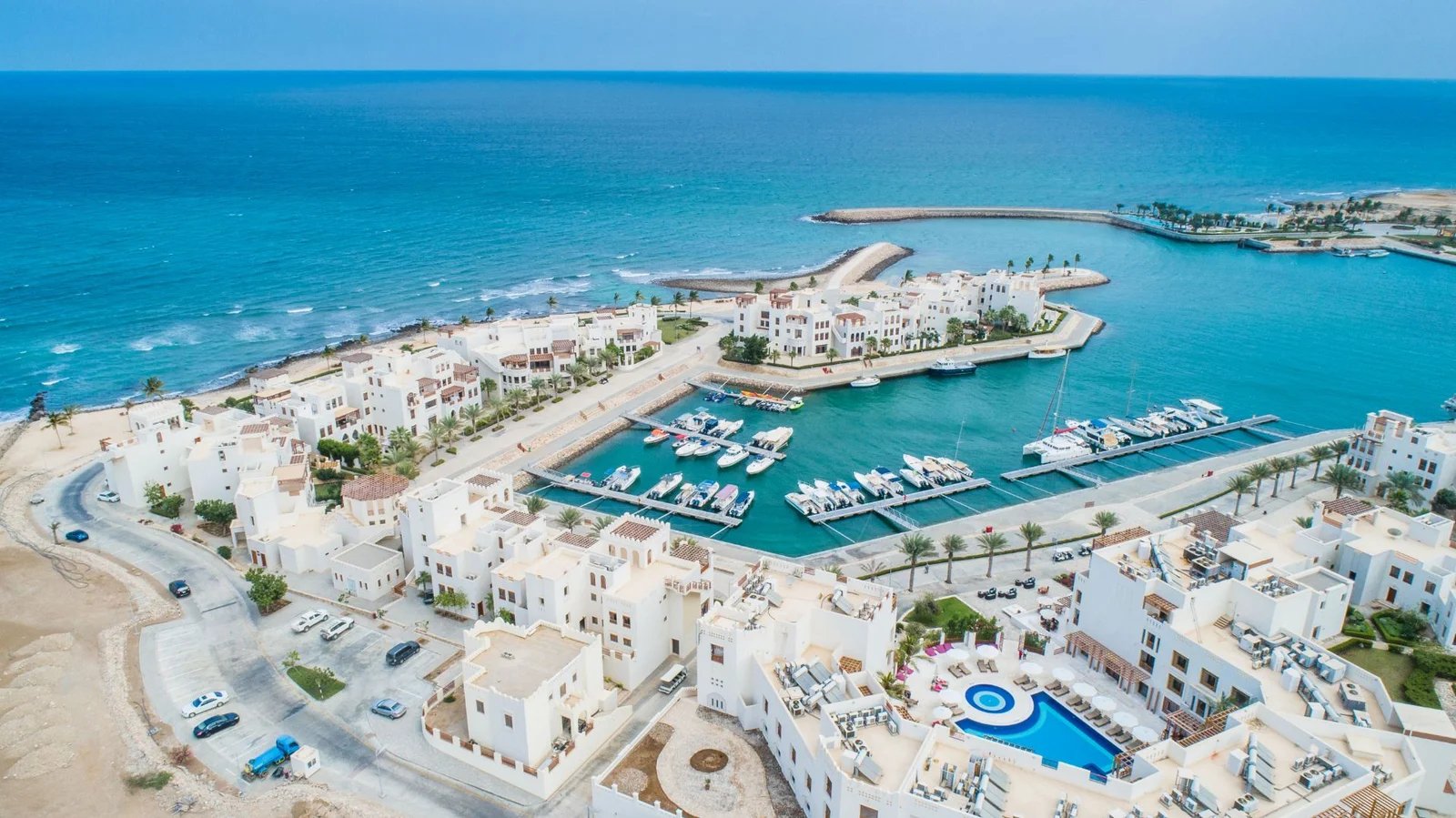
A masterplanned coastal community that illustrates Oman’s lifestyle-led property proposition.
Defined ownership routes - with property-level checks.
One of Oman’s central attractions for international buyers is that non-Omani ownership is possible through defined legal routes. Integrated Tourism Complexes, commonly called ITCs, have long been an important part of this framework. Official regulations permit eligible non-Omani natural or legal persons to own certain built units or plots in approved complexes for residential or investment purposes, subject to the rules applying to that development and property.
This creates access to professionally planned communities that may combine homes with hospitality, leisure, retail, marina, golf, beach or public-realm amenities. Yet the label “ITC” should never replace due diligence. The buyer must verify the project’s official status, the exact tenure being transferred, title documentation, permitted use, completion and handover terms, owner obligations, and any restrictions relevant to resale or leasing.
Other ownership or usufruct arrangements may also exist under specific programmes or locations. Their rights, duration and eligibility can differ from freehold ownership. Marketing language such as “ownership”, “residency eligible” or “government-backed” must be tested against the governing documents and current official process. Do not assume a rule applying to one project applies to another.
A place people may choose for life, not only yield.
Oman’s property proposition is closely connected to its lifestyle. The country combines dramatic coast, mountains and desert with established urban services and a cultural identity that has not been designed solely for visitors. For some buyers, this produces a more grounded long-term appeal than a purely speculative market. They may want a primary home, a seasonal base, a future retirement plan or a property their family can use.
Personal use has economic meaning, even when it does not appear as rental income. A home that replaces hotel stays, supports remote work, hosts family or makes a future move easier creates utility for its owner. That does not justify overpaying. It does mean the investor’s calculation can include both financial and lived value, provided the two are kept transparent.
Lifestyle also helps shape tenant and buyer demand. Well-managed communities with useful amenities, strong landscaping, security, access to schools and services, and a clear identity may retain appeal through different market conditions. Hospitality-linked locations may benefit from short-stay demand, but they can also carry higher operating costs and more seasonality. Family-oriented districts may offer steadier occupancy but different rent ceilings.
Visit at more than one time of day. Walk the routes residents will actually use. Speak with current owners or tenants where possible. Observe noise, parking, shade, construction, maintenance and the quality of shared spaces. A brochure can describe a lifestyle; only the place itself can demonstrate whether that promise is functioning.
Choose the demand story that fits your objective.
“Oman property” is too broad to be an investment thesis. A capital-city apartment, a waterfront villa, a golf-community home and a resort unit in Salalah can respond to completely different demand. The right place begins with the investor’s objective and the likely end user.
Muscat offers the deepest mix of employment, schools, healthcare, government, retail and international access. Established and emerging communities can appeal to professionals, families, owner-occupiers and second-home buyers. Even within Muscat, compare neighbourhood maturity, supply pipelines and access carefully.
Al Mouj Muscat is known for its marina-led, mixed-use environment and established amenities. Muscat Hills presents a golf and residential setting with proximity to key city infrastructure. Other masterplanned communities around the capital may have larger future-development narratives. Their opportunities and risks depend on delivery stage, developer strength, unit type and price.
Salalah and Dhofar have a distinctive tourism and seasonal-use profile. The khareef period can support visitor interest, while resort communities may attract second-home buyers. Investors should model seasonality rather than annualising a peak-month rent. Duqm is linked to industrial and logistics growth; property demand there should be assessed through actual workforce, employer and supply data rather than national headlines alone.
KV Land’s Oman location guides are designed to help buyers compare places with an ownership-first perspective. The most useful shortlist is usually small: a few assets in locations whose demand drivers you can explain in plain language.
Architecture matters.

Design quality, orientation, materials and the experience of shared spaces all influence long-term use and demand.
Build the return from evidence, not adjectives.
Property returns generally come from some combination of rental income, capital appreciation and personal use. Every component should be modelled separately. If an opportunity only appears attractive when optimistic rent, full occupancy and rapid appreciation happen together, the margin of safety may be too thin.
Start with achievable rent supported by recent comparable evidence. Adjust for vacancy, incentives, letting fees, management, furnishing, utilities paid by the owner, service charges, insurance, repairs and periodic refurbishment. For short-term or holiday letting, include booking-platform costs, housekeeping, linen, guest management and pronounced seasonality. Check whether short-term letting is permitted by the development, operator and applicable regulations.
Then examine the purchase and exit sides. Identify reservation payments, instalments, financing costs where relevant, registration or transfer charges, professional fees and any taxes applicable to the transaction or ongoing use. Oman’s Tax Authority notes that VAT treatment can differ between residential and commercial real estate and between types of transaction. Current guidance should be confirmed through the Oman Tax Authority and a qualified tax adviser.
Capital appreciation should be treated as a scenario, not a guarantee. Model a base case with conservative assumptions, a downside case with lower rent and a longer exit, and an upside case. Consider currency exposure if your income or liabilities are not in Omani rials. Finally, ask what would make the asset liquid: a broad buyer pool, a rare view, proven rent, strong community management, completed amenities or an attractive price relative to alternatives.
Plan beyond the purchase, but keep the decisions separate.
For some buyers, property is part of a wider plan to spend more time in Oman. The country’s official Golden Residency programme identifies property ownership in qualifying tourism zones among potential routes, alongside business investment, financial assets and other categories. The official portal describes long-term residency options and eligibility pathways for investors.
Residency can add meaningful personal value, but it should not be treated as an automatic feature of every property. Programme thresholds, eligible property types, application evidence, family sponsorship and renewal conditions may change. A development’s sales representative can explain its offer, but only the competent authorities and qualified immigration advisers can confirm how current rules apply to the buyer.
Use the official Oman Golden Residency portal as the starting point. Verify eligibility before relying on residency in your financial or family plan. Ask whether the residency route is linked to continued ownership or investment value, what happens if the property is sold, and which documents must be maintained.
It is often wise to run two parallel decisions: first, “Is this a sound property purchase for my objective?” and second, “Does this ownership support my desired residency route under current rules?” When both answers are supported independently, the combined proposition is much stronger.
A disciplined purchase protects the opportunity.
Good due diligence is not a final formality. It begins before the shortlist. Clarify your budget, intended use, holding period, financing position, preferred ownership structure and need for residency. That brief prevents attractive but unsuitable properties from consuming attention.
For the chosen asset, verify the seller or developer, official project approvals, the legal description of the unit, title or transfer route, payment schedule, escrow or payment protections where applicable, completion status, handover definition, defect process and consequences of delay. For an off-plan purchase, understand exactly what is contractual and what is only illustrative. For a resale, review title, outstanding charges, condition, tenancies and any owner association obligations.
Commission appropriate legal, technical, financial and tax advice. Inspect the property and common areas. Review service-charge budgets and what they include. Ask for evidence of achieved rent rather than a forecast alone, and compare like with like: size, view, furnishing, floor, lease term and date. If financing is involved, test affordability against rate changes and vacancy.
Keep the investment thesis to one page. State why this unit, why this location, who will rent or buy it later, what could go wrong, and what evidence would cause you to walk away. A clear thesis makes negotiation easier and reduces the risk of buying simply because the process has gained momentum.
KV Land can organise the property search, local context and transaction journey. We do not replace independent legal, tax, immigration, valuation or technical professionals. The right advisory team should make the decision more precise, not more complicated.
Practical answers before your shortlist.
Can foreigners buy property in Oman?
Eligible non-Omani buyers can own certain property through defined routes, including qualifying property in approved Integrated Tourism Complexes. The exact right, property status and buyer eligibility must be verified for each transaction.
Does buying property automatically provide residency?
No assumption should be made. Certain qualifying investments may support a current residency route, but eligibility, value thresholds, documents and renewal conditions must be confirmed through the official Oman residency programme and qualified advice.
Is Oman property a good investment?
It can suit investors who value long-term fundamentals, lifestyle utility and carefully selected locations. Whether a specific property is good depends on price, title, demand, costs, condition, management, supply and the buyer’s objectives.
Which Oman location is best for investment?
There is no universal best location. Muscat, Salalah, Duqm and individual masterplanned communities serve different residents and demand patterns. Choose according to the end user, holding period, use plan and evidence of demand.
What costs should I include?
Include the full acquisition, ownership and exit picture: professional and registration costs, financing, service charges, insurance, management, vacancy, repairs, furnishing, utilities where applicable, and current tax treatment.
Should I buy off-plan or completed property?
Off-plan property may offer phased payments and access to a developing community, but adds delivery and execution risk. Completed property provides clearer evidence of quality, running costs, rent and surroundings. The right choice depends on risk tolerance and evidence.
Start with official information.
This guide uses official public sources for the national investment framework, property ownership regulations, residency and tax context. Review Oman Vision 2040, the Ministry of Commerce, Industry and Investment Promotion, the Ministry of Heritage and Tourism, Oman Golden Residency, and the Oman Tax Authority.
Information is general, not legal, tax, financial or immigration advice. Rules, eligibility and costs can change. Verify all material facts with the relevant authority and appropriately qualified advisers before acting.
Turn the Oman opportunity into a clear shortlist.
Tell us your budget, preferred use, time horizon and residency priorities. We’ll help you compare suitable properties with local context and a diligence-first process.
Reviewed buyer guidance
Investment guidance uses official public sources and avoids promised returns. Verify every project, contract and cost before commitment.
Editorially reviewed by the KV Land advisory team on 23 July 2026. Meet the reviewer · Sourcing and corrections policy · Ask a property question